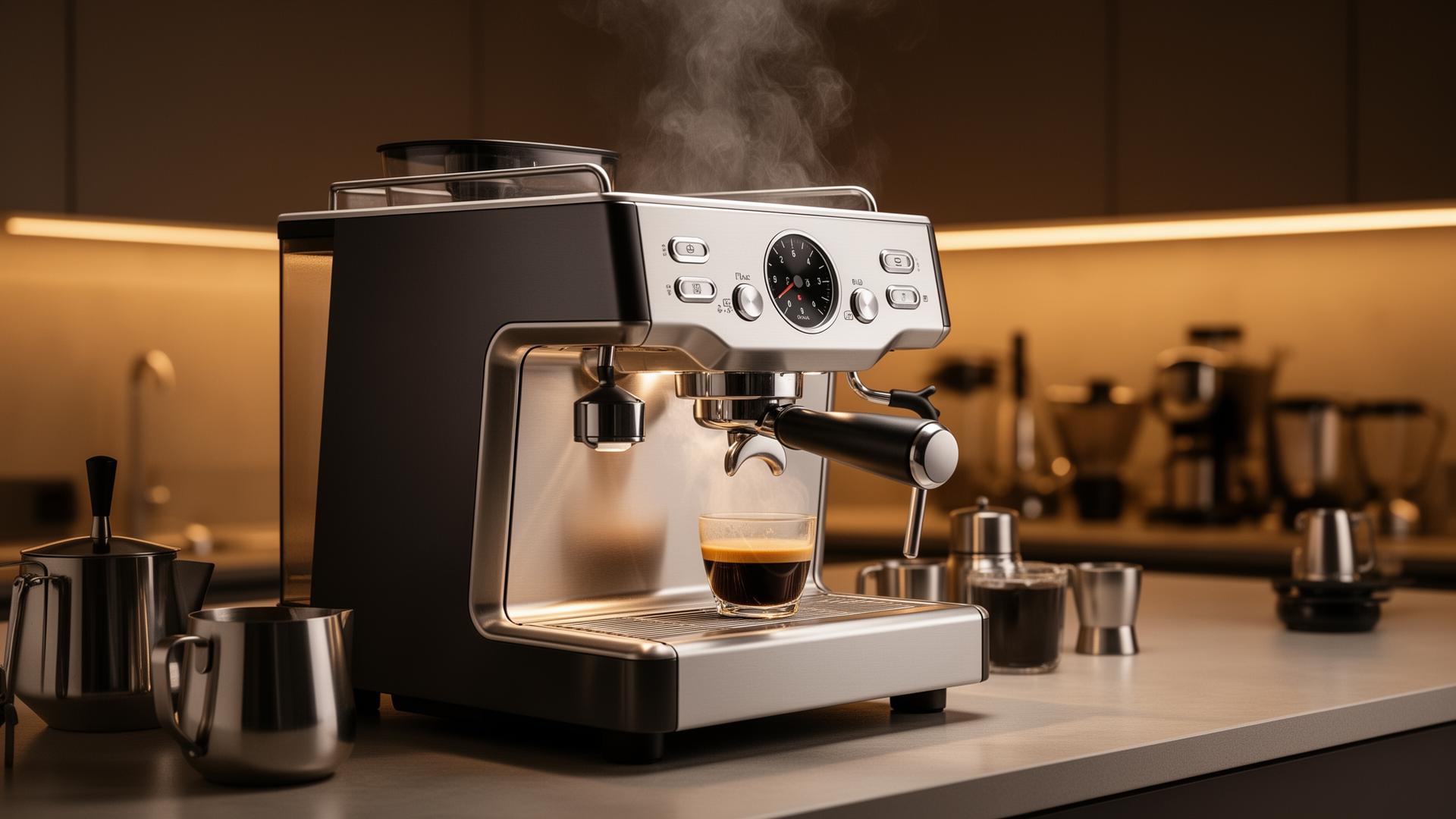
The smallest espresso machine is not automatically the best machine for a small kitchen. Depth, water access, grinder space and the way the machine is cleaned matter as much as its advertised width.
Before final publication: add measured dimensions, original photographs and hands-on notes for each recommended model. Product availability and pricing should be checked for both the UK and Spain.
Measure the working space, not just the footprint
Record the width, depth and height of the counter. Then account for the extra room needed to lift a water tank, fill the hopper, lock in the portafilter and steam milk. A machine that technically fits under a cupboard may be irritating to refill every day.
Leave space for ventilation and keep electrical equipment away from the sink. If the machine must be pulled forward for every use, add that movement to your assessment.
Decide where the grinder will live
Traditional espresso requires a capable grinder. A narrow machine beside a full-size grinder may occupy more space than a slightly wider bean-to-cup model. Built-in grinders reduce separate appliances but can be harder to upgrade and repair.
For pre-ground coffee or pressurised baskets, the setup is simpler, but the ceiling for freshness and adjustment is lower. Be honest about whether you want a hobby or a quick morning drink.
Check noise and warm-up behaviour
Apartment kitchens make pump and grinder noise more noticeable. Read measurements where available, but also look for first-hand reports about vibration, rattling drip trays and the sound of milk steaming.
Fast warm-up is valuable when coffee happens between other tasks. Machines with larger boilers may offer stronger steaming and temperature stability but usually take longer and use more energy.
Make maintenance part of the buying decision
A machine needs room for the drip tray to slide out and for the steam wand to be wiped immediately. Check the recommended descaling routine, filter availability and whether replacement seals and portafilters are sold locally.
Compact equipment becomes poor value when ordinary maintenance requires proprietary parts that are difficult to source.
A sensible shortlist
Compare models using the same criteria: complete working dimensions, grinder requirement, warm-up time, milk workflow, noise, cleaning time, repairability and local warranty. Once original testing is complete, this guide will publish a model-by-model shortlist rather than relying on specifications alone.